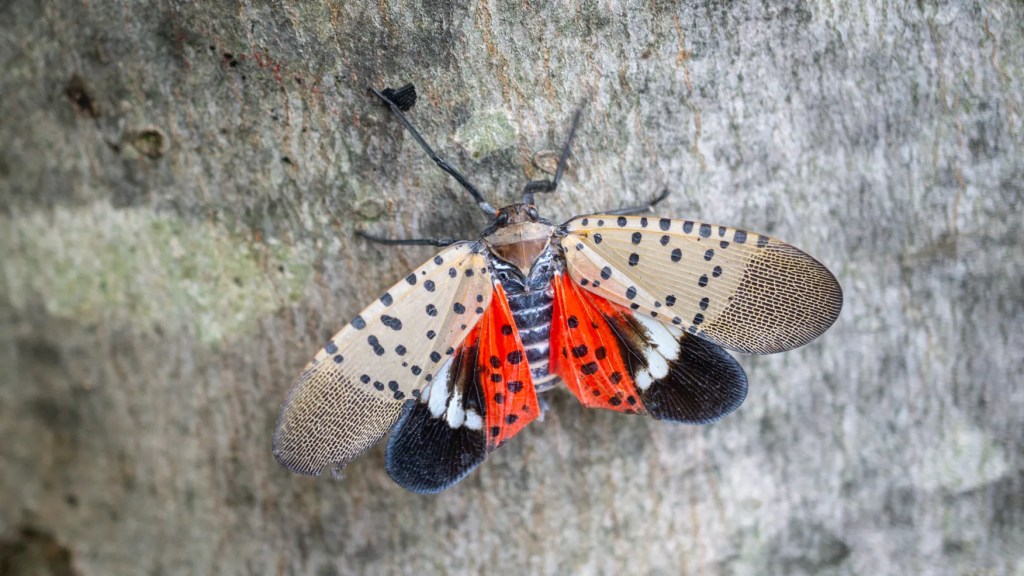
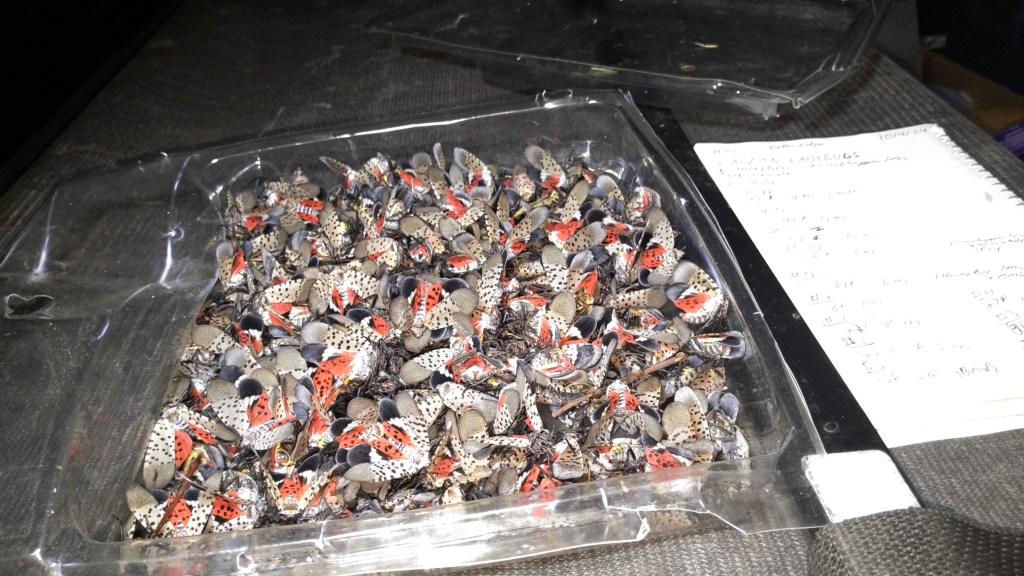
As California strengthens its preparedness for the Spotted Lanternfly (SLF), one of the most effective actions vineyard managers can take right now is helping identify and map the invasive Tree-of-Heaven (Ailanthus altissima) across their properties and surrounding landscapes.
Tree-of-Heaven (TOH) is more than a fast-growing weed—it is the preferred host plant that supports SLF feeding and reproduction. By locating and reporting TOH early, growers contribute to a statewide effort to reduce future risk and better protect vineyard regions.
🗺️ Report Tree-of-Heaven Sightings
California’s EDDMapS reporting tool makes it easy to log TOH locations:
➡️ Submit sightings:
https://www.eddmaps.org/report/plants.cfm?state=CA
These reports help state and local agencies prioritize monitoring, response, and eventual removal efforts.

🔍 Reliable Tree-of-Heaven Identification Tools
If you need help confirming a suspected TOH tree, use any of these trusted resources:
- UC IPM Pest Note:
https://ipm.ucanr.edu/PMG/PESTNOTES/pn74142.html - Purdue Extension ID Guide:
https://extension.purdue.edu/news/county/whitley/2023/08/identifying-tree-of-heaven.html - Penn State Extension ID Guide:
https://extension.psu.edu/tree-of-heaven-accurate-identification
These guides provide clear photos, distinguishing features, and comparisons with common lookalike species such as sumac and black walnut.
🌿 Key Identification Features for Vineyard Managers

Tree-of-Heaven is often found along vineyard edges, riparian corridors, roadsides, and disturbed soils. Field characteristics include:
- Leaves: Large pinnate leaves (1–4 feet), with 10–40 leaflets
- Leaflets: Each leaflet has a distinctive glandular notch/tooth near the stem end
- Odor: Crushed leaves or stems emit a strong rancid/peanut-butter-like smell
- Seeds: Papery winged samaras in large hanging clusters
- Growth Habit: Extremely fast-growing, aggressive resprouting, forms dense clonal stands
- Bark: Smooth gray bark with vertical “stretch mark” striations on mature trees
If a plant matches several of these traits, it is worth reporting.
🍇 Why This Matters for the Wine Industry
Tree-of-Heaven is documented as the primary reproductive host for the Spotted Lanternfly. In every region where SLF has established:
- Populations concentrate on TOH in late summer and fall
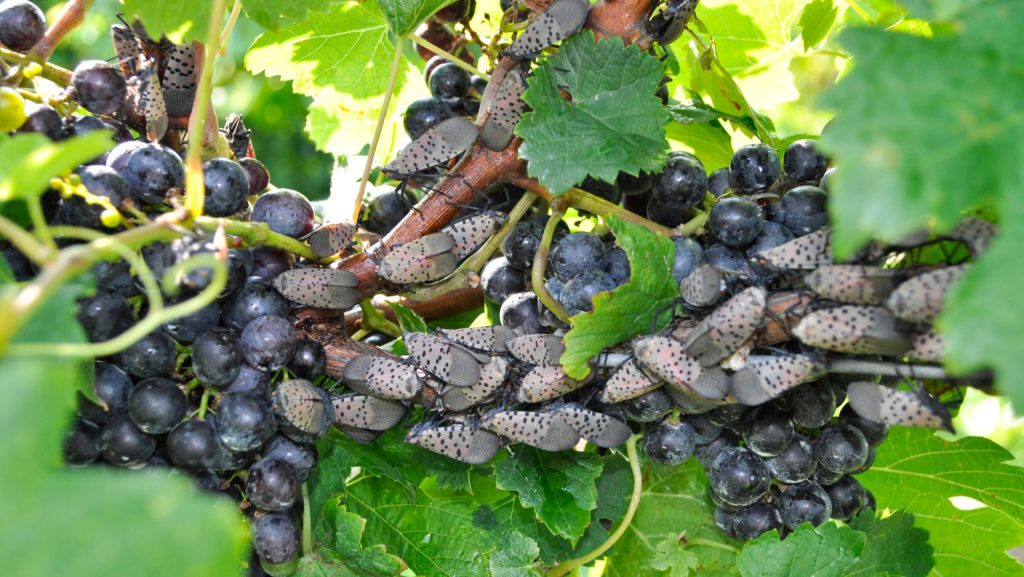
- SLF uses TOH as a staging point before moving into vineyards
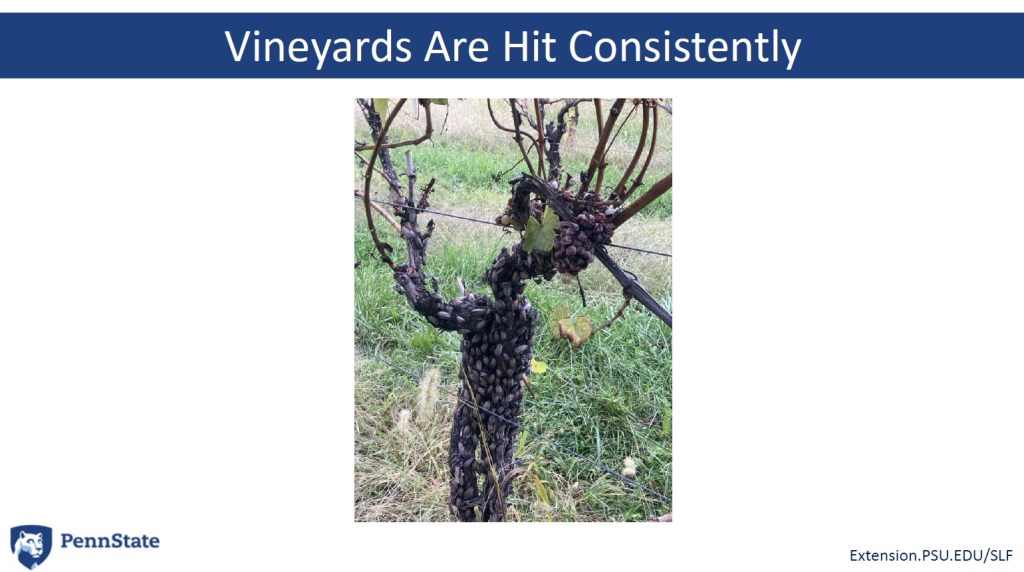
- Vineyards near unmanaged TOH stands experience heavier pressure
- Early SLF outbreaks are consistently tied to landscapes with abundant TOH
Removing or managing TOH before SLF arrives is one of the most effective preventative strategies available to growers.
🛠️ Technical Notes on Removal (For Planning Ahead)
Tree-of-Heaven removal requires strategic timing. Cutting alone will stimulate regrowth and expand the stand. Current best practices:
- Late Summer–Fall:
Apply systemic herbicide while the tree is moving energy downward into the root system. - Winter–Early Spring:
Remove dead stems after herbicide has taken effect. - Following Growing Season:
Monitor for and spot-treat resprouts.
For properties with large TOH stands, coordination with county Agricultural Commissioners or RCD staff may be appropriate.
🚜 Where Vineyard Managers Should Survey
During ranch walks or routine checks, inspect:
- Property boundaries
- Creek banks and riparian areas
- Roadsides and rights-of-way
- Unmanaged corners or fallow land
- Neighboring parcels (especially unmanaged or wildland areas)
- Equipment yards or disturbed soil from construction activity
TOH frequently takes hold in these areas and spreads quickly if unchecked.
📣 Grower Call to Action
- Walk your ranch edges and nearby corridors where TOH is likely to appear.
- Use the ID tools to confirm suspected trees.
- Report every TOH sighting at the EDDMapS link above.
- Plan for removal during the correct seasonal window if trees are on your property.
- Encourage neighbors and local landowners to participate—SLF risk is regional, not parcel-by-parcel.
Staying proactive now will help keep California vineyards resilient and better protected when SLF pressure begins to increase. Early identification and mapping of Tree-of-Heaven is a simple, high-impact step that benefits growers across the entire region.






 Sonoma County Pest Control District Coalition